
Knowing when to follow up with clients can be the difference between closing a deal and being forgotten.
Most professionals don’t lose opportunities because they lack skill, they lose them because they either follow up too late… or not at all.
Think about your inbox: messages pile up fast.
If someone doesn’t follow up, it’s rarely intentional when you forget, it’s just life.
Following up isn’t annoying when it’s done right, it’s helpful.
When to Follow Up With Clients After First Contact
The first follow-up sets the tone for your entire relationship.
Best practice
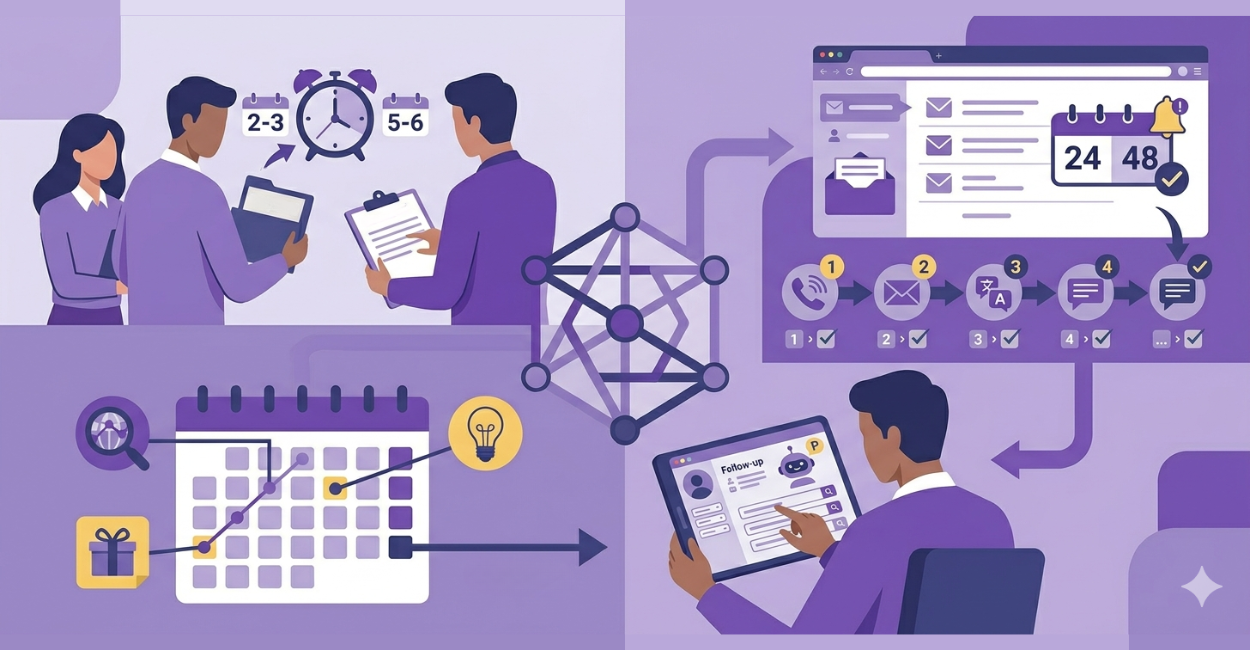
Follow up with clients within 24-48 hours after your initial interaction.
Why?
- You’re still fresh in their mind
- It shows professionalism and reliability
- It keeps momentum going
Example: “Hey [Name], great connecting earlier. Just wanted to follow up and see if you had any questions about what we discussed.”
Short, clear, no pressure.
When to Follow Up With Clients After a Proposal
This is where most people hesitate and miss opportunities.
Best timing
First follow-up: 2-3 days after sending the proposal
Second follow-up: 5-6 days later
Clients are often busy, reviewing internally, or waiting for approvals.
Your follow-up acts as a gentle nudge, not a push.
Pro tip: Add value in each follow-up.
- Clarify a point
- Share a relevant example
- Answer a common concern
When to Follow Up Without Being Pushy
The fear of being “too much” stops people from following up consistently.
But here’s the truth: Silence doesn’t mean ‘no’, it usually means ‘not yet’.
To follow up without sounding pushy:
- Keep messages short and respectful
- Avoid guilt-based language (“Just checking if you saw this…”)
- Focus on helping, not chasing
Better approach: “Wanted to circle back in case this is still on your radar. Happy to answer any questions or adjust things to fit your needs.”
This keeps the door open without pressure.
A Simple Timeline You Can Use to Follow Up With Clients
If you’re still working out your follow up routine, you can try this proven structure:
Day 1: Initial contact
Day 2-3: First follow-up
Day 5-7: Second follow-up
Day 10-14: Third follow-up
Day 20+: Final check-in or nurture message
After that, move them into a long-term nurture cycle (occasional check-ins, value-driven messages).
Common Follow-Up Mistakes to Avoid
Even if you know when to follow up with clients, these mistakes can hurt your chances:
- Waiting too long (momentum dies fast)
- Sending generic messages (feels impersonal)
- Following up without adding value
- Giving up after one attempt
Most deals happen after multiple touchpoints, not the first message.
Tools to Make Following Up Easier
Consistent follow-up is hard to manage manually, especially if you’re juggling multiple conversations.
That’s where tools like evyAI come in.
With the right system, you can:
- Track conversations
- Generate personalized follow-up messages quickly
This removes the guesswork and helps you stay consistent without sounding robotic.
If there’s one thing to remember about when to follow up with clients, it’s this:
Consistency matters more than perfect timing.
You don’t need the perfect message, you don’t need the perfect moment.
You just need to show up again and again in a way that feels natural and helpful.
Try out evyAI for FREE by installing the Chrome extension here.
If you like evyAI consider upgrading to a Premium or Pro subscription for unlimited posts, comments, and more.